

“in two generations the ice cap will be dead”
Mike Reid
Glacier facts
-
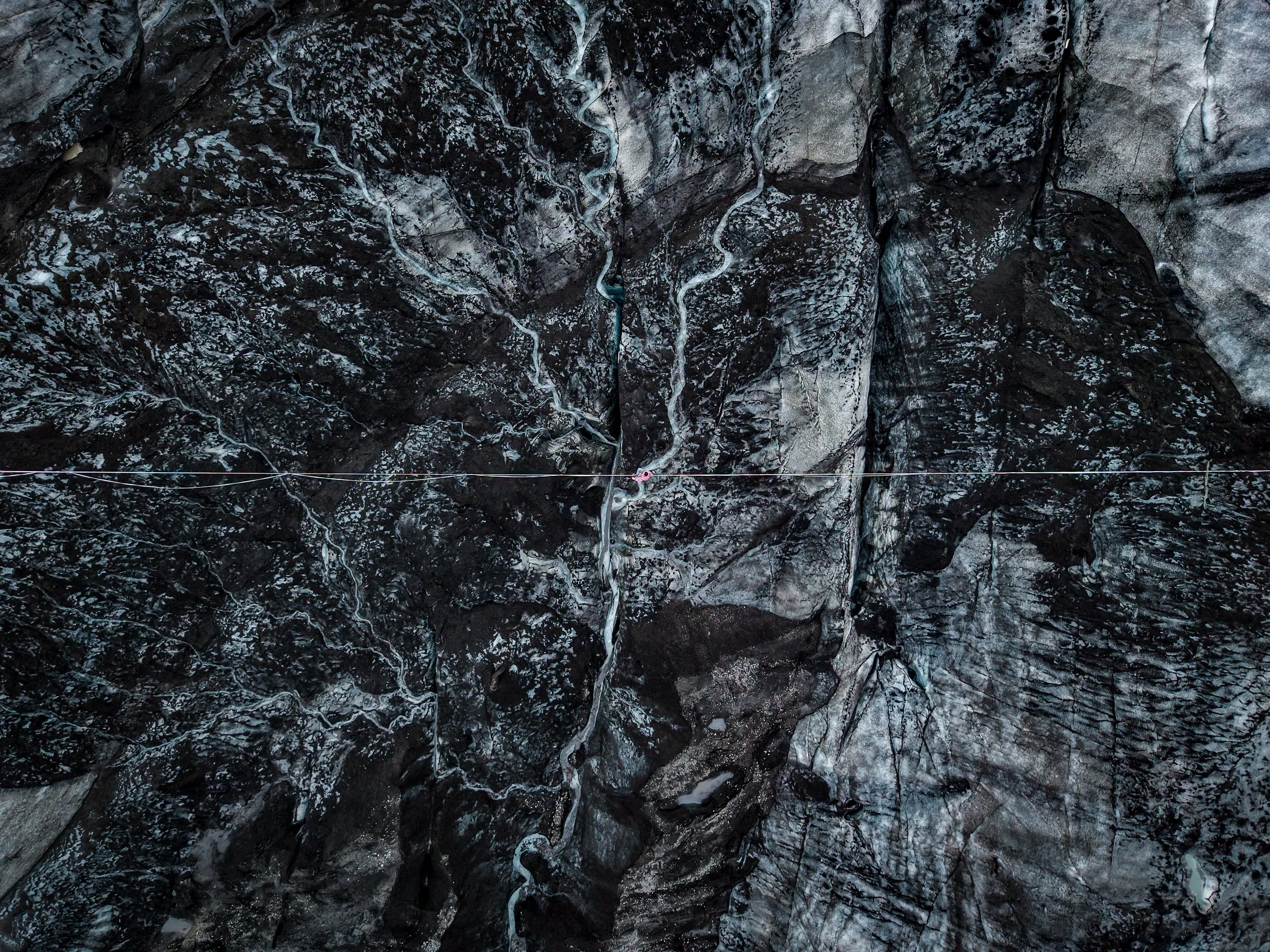
Sólheimajökull is an outlet glacier extending from the Mýrdalsjökull ice cap in southern Iceland.
Since 1995, its terminus has retreated by approximately two kilometres. Annual retreat varies, but it is frequently measured at between 50 and 100 metres.
The glacier is also becoming thinner. By 2010, its front was estimated to be approximately 120–150 metres thinner than it had been in 1960.
These changes are visible within a human lifetime, and sometimes within the space of a single year.
-
Glaciers cover roughly 10% of Iceland’s land area, but they are retreating rapidly.
Research indicates that Icelandic glaciers lost approximately 540 billion tonnes of ice between the late nineteenth century and 2018–19, equivalent to around 16% of the glacier mass stored at the beginning of that period.
During the 2024–25 glacial year alone, Iceland is estimated to have lost approximately 15 billion tonnes of ice.
-
SEA LEVEL RISE
Melting mountain glaciers are a major contributor to rising sea levels. Although they contain less ice than the Greenland and Antarctic ice sheets, their rapid response to warming means their contribution is already significant.
Rising sea levels increase the risk of coastal flooding, erosion, saltwater intrusion and damage to homes, infrastructure and ecosystems.
FRESHWATER SECURITY
Glaciers function as frozen water towers.
Their seasonal meltwater supports rivers, agriculture, drinking-water supplies, hydropower and ecosystems. As glaciers melt faster, downstream flows may temporarily increase. But as the stored ice diminishes, many regions face reduced water availability during dry periods.
CLIMATE FEEDBACK
Ice reflects a large proportion of incoming sunlight.
When a glacier retreats, darker rock, soil and water are exposed. These darker surfaces absorb more heat, reinforcing local warming and contributing to further melting.
FROZEN ARCHIVES OF OUR ENVIRONMENT
Year after year, snowfall accumulates on glaciers and icecaps, each new layer can preserve evidence of the environmental conditions in which it formed. By extracting cylinders of ice known as ice cores, scientists can read these layers like pages in a history book.
Tiny bubbles trapped inside the ice preserve samples of the ancient atmosphere, allowing researchers to measure how greenhouse gases such as carbon dioxide and methane have changed over time.
Some polar ice-core records extend back hundreds of thousands of years, providing a vital comparison between natural climate variation and the rapid atmospheric changes of the industrial era. Ice cores have even recorded the spread of human pollution into remote environments, including industrial lead, deposited across Antarctica.
-
Glacier melt is one of the best indicators of a warming planet. It is already transforming coastlines, freshwater systems, mountain environments and communities around the world.
This shows what climate change is doing to our planet.
-
Between 2000 and 2023, glaciers worldwide lost an average of approximately 273 billion tonnes of ice. The rate of loss increased by approximately 36% between the first and second halves of that period.
Since 1975, cumulative global glacier loss has reached approximately 9,580 gigatonnes of water. Around 7,500 gigatonnes of that loss occurred after the year 2000.
The World Glacier Monitoring Service states that glacier ice loss from 2006 - 2016 contributed almost 1 mm per year to sea level and accounted for 25–30% of the observed global sea-level increase.